Traceability per part: track its cost in real time, from the purchase delivery note to the sales invoice, with live stock always up to date. Know when, where and on which boat each part was fitted — and see stock while you build a quote, without leaving the quote screen.
Parts are where marine businesses quietly lose margin — used but unbilled, ordered twice, or found missing on the morning of the job.
Your parts catalogue sits behind every work order, so fitting a part is the same action as taking it off stock and adding it to what the owner will be billed.

One action, not three. The technician records the part on the job, stock drops, and the cost is already sitting on the invoice when the work order closes.
Whatever your shelves hold, it belongs to the same catalogue the jobs draw from.
Yes. Adding a part to a work order takes it off stock and puts its cost onto the job, so the shelf and the invoice stay in step without a second entry.
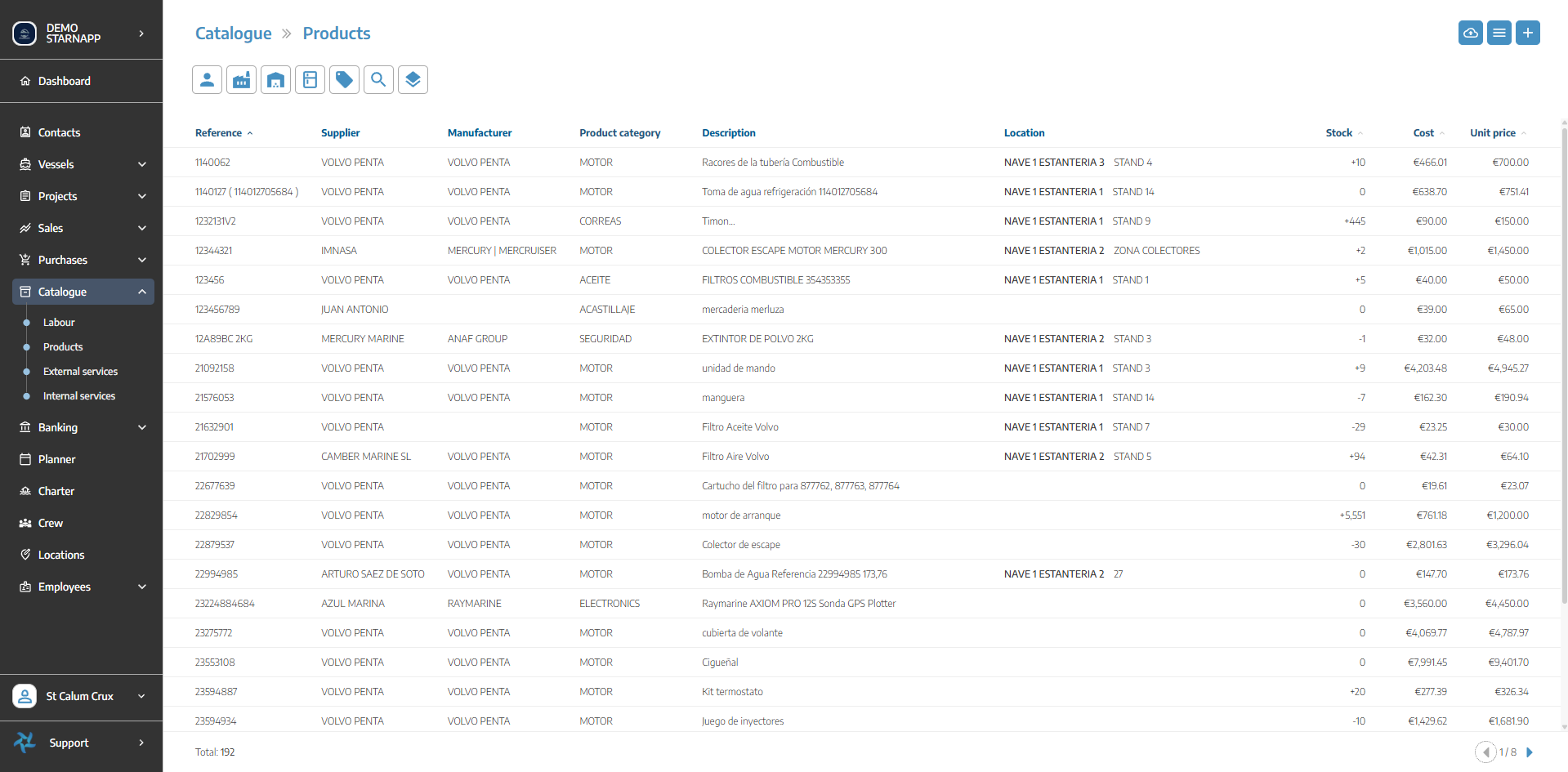
Yes, down to the shelf. Each part records its warehouse, aisle and stand, so whoever is picking it for a job knows exactly where to go instead of searching the store.
Yes. Parts carry their supplier and their manufacturer separately, alongside the reference, category, cost and unit price — so reordering starts from the record rather than from someone's memory of who you bought it from last time.
Yes. Parts fitted on a work order become invoice lines automatically, which is what stops the classic problem of a part being used but never billed. See invoicing & banking
Yes. Because parts, labour and price all sit on the same work order, the parts cost is part of that job's margin rather than a separate calculation.
Yes. Multi-yard businesses can manage stock per location with shared reporting, and roles control who can see and move what.
Twenty minutes, your boats, your jobs. No slides.