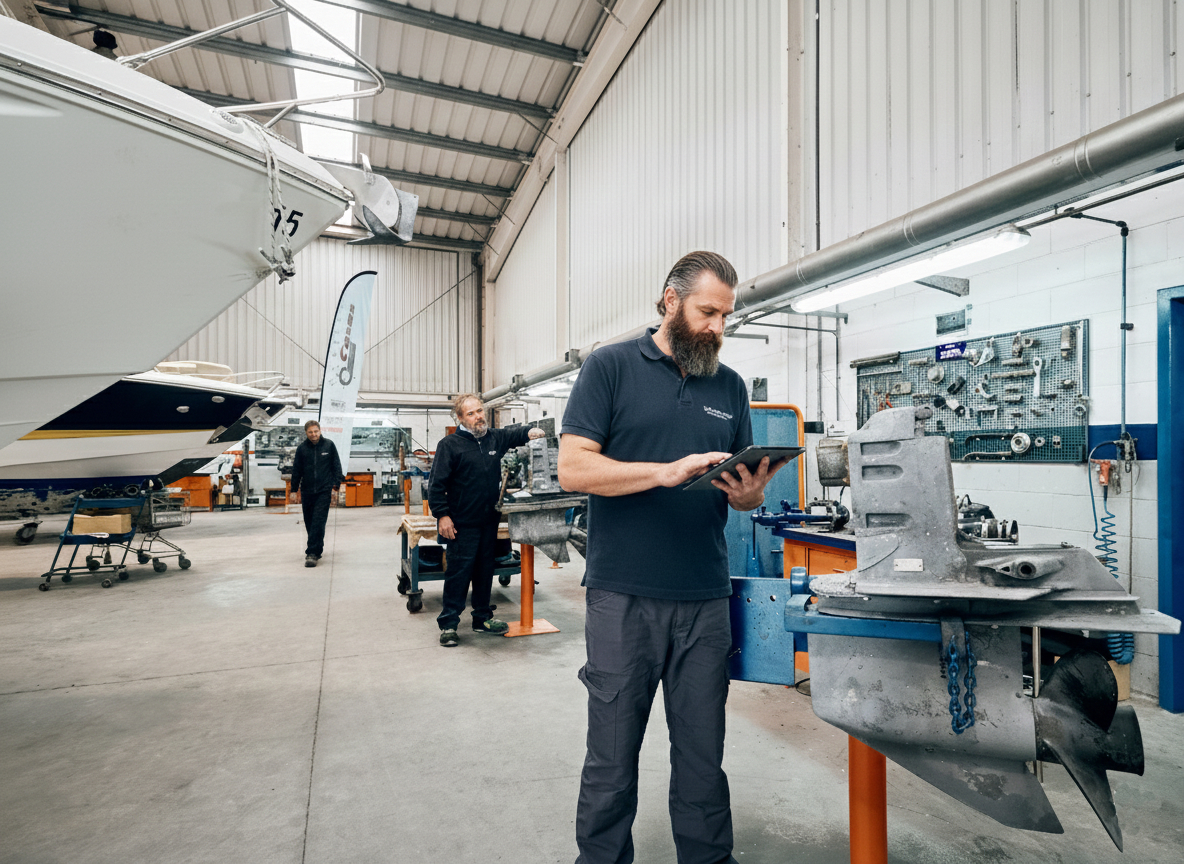
Running a marine business is a constant challenge. In this industry, we know that time isn’t measured in days, but in tides—and in customers who won’t wait. If you’re like most managers in the sector, you’re familiar with the frustration of dealing with mountains of paperwork, misaligned communication between the workshop and the office, and a reliance on spreadsheets that simply don’t get the job done.
In this sea of complexity, we often assume the solution must be a traditional ERP—bringing to mind costly implementations and rigid systems that don’t adapt well to the dynamic nature of the dock. But StarNapp is not just another piece of software. It’s a solution designed by and for the marine industry, breaking away from these preconceived notions.
This article is not a list of features. It’s a revelation of five surprising insights about StarNapp, based on real user experiences, showing how a well-designed tool can truly transform your day-to-day operations.
The phone rings. It’s an important customer with an urgent breakdown at the dock. With a traditional ERP, this is where the first headache begins: you can’t even start logging the job without first creating a complete customer and vessel profile. StarNapp understands that your business can’t wait.
The system allows you to create customer and vessel records on the fly when opening a new work order (WO). You can enter only the essentials—the customer’s name and the vessel’s name—and get your team working immediately. Full billing and tax details are only required at the final step, when generating the invoice.
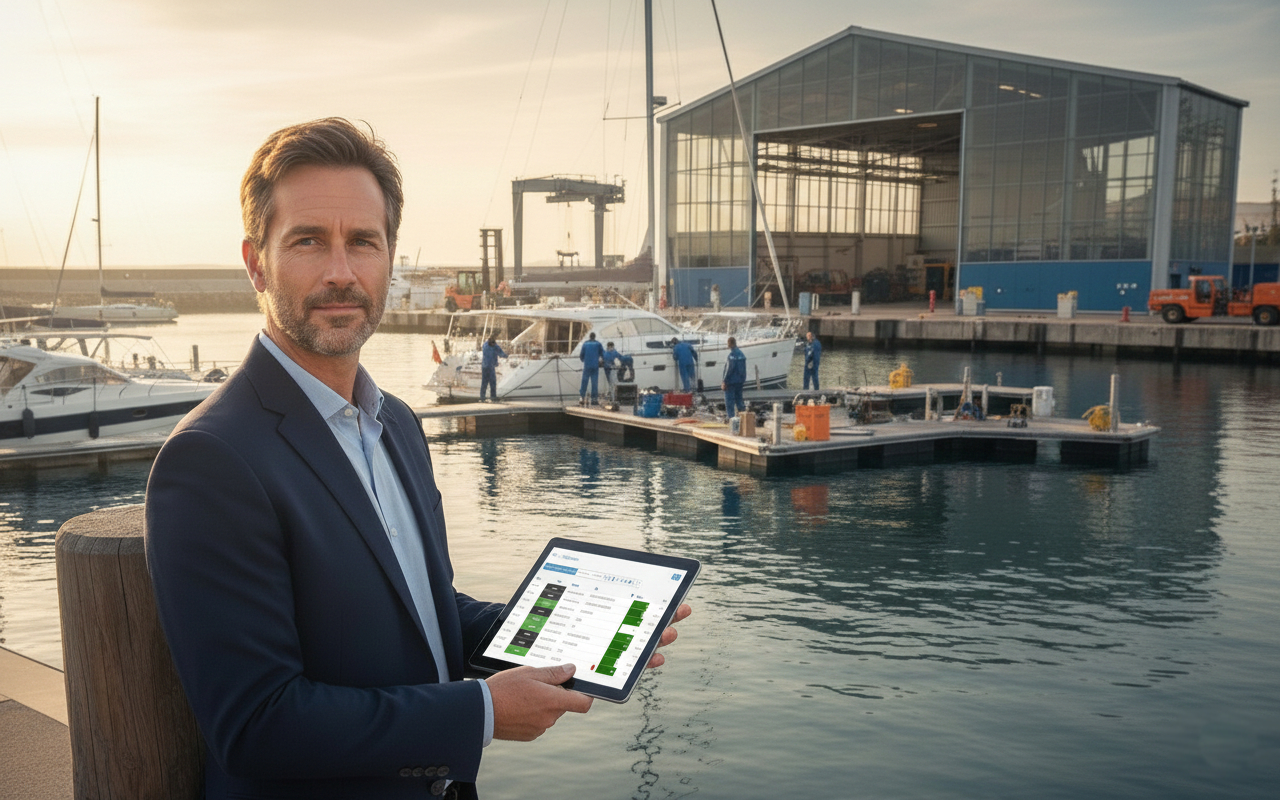
This is a game changer. It means operational urgency takes priority over system bureaucracy, allowing you to serve your customers with the agility the industry demands—without wasting time on exhaustive upfront setup.
One of the biggest fears when adopting new technology is the migration process. We imagine weeks of chaos, lost data, and an endless learning curve. The reality with StarNapp, according to those who’ve already made the switch, is radically different.
Companies coming from complex systems or manual Excel-based management describe the transition as surprisingly simple. Don’t just take our word for it—listen to Cristina from Nautec, an official Volvo service center:
“…the transition […] was super easy. It was a very simple process because creating products, entering vessels, and building the entire database is very agile.”
This experience is echoed elsewhere. Marivent Yachts, for example, highlights that they had the system running “almost 100%” in just a month and a half to two months. Forget about endless implementation projects—StarNapp delivers value almost immediately.
How many times have you sent a question to a software provider only to receive an automated reply and wait days for a solution? In our industry, a technical issue can bring a repair or a sale to a halt. Fast support isn’t a luxury—it’s an operational necessity.
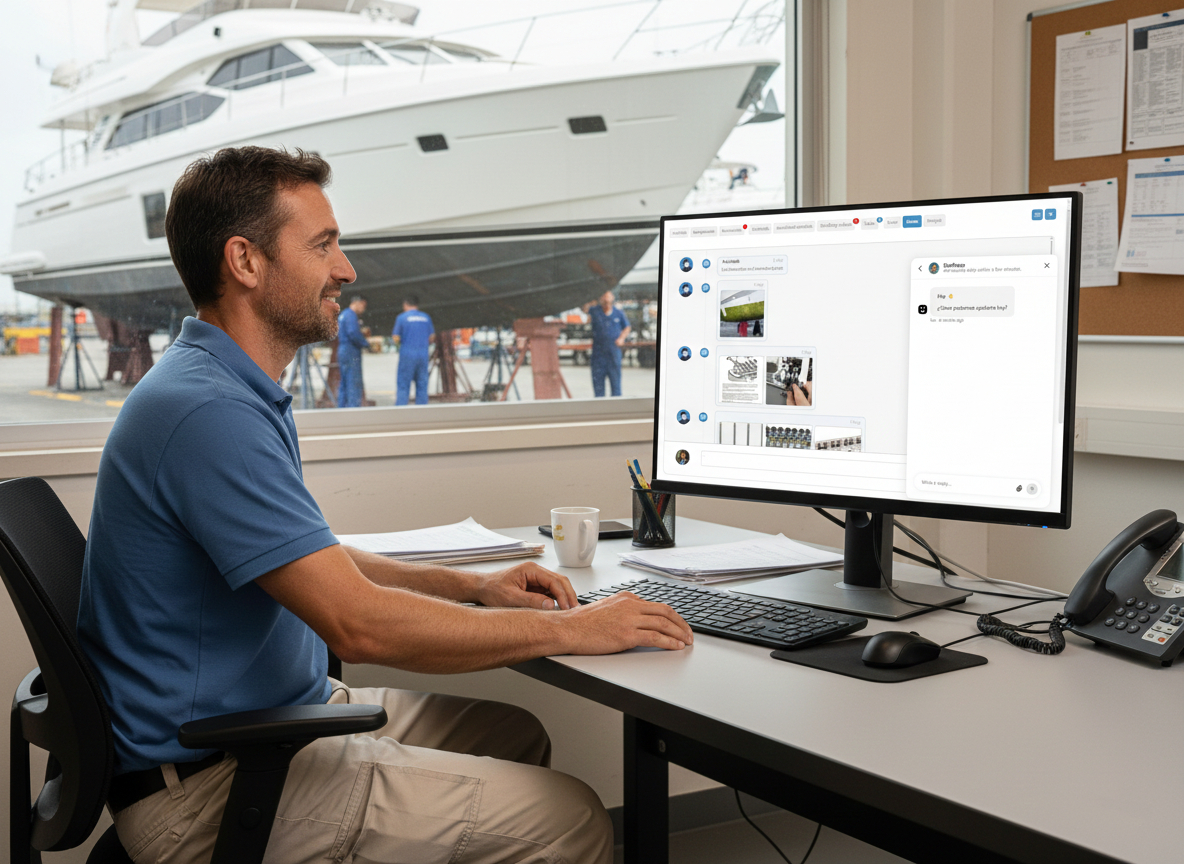
This is where StarNapp truly stands out. Users consistently highlight the speed and effectiveness of the support team. Access is direct via chat, and responses are practically immediate. As Estana from PSB puts it:
“…perfect guys, perfect support—I ask something and get a response within minutes.”
This isn’t an isolated case. Clients like Marivent Yachts and Euromed confirm they receive responses “almost instantly,” demonstrating a genuine commitment to customer success and a deep understanding of the urgency that defines daily life in a marine business.
Think about grease-stained paper notes, calls to the workshop to confirm which materials were used, or photos of a critical issue lost in a mechanic’s personal WhatsApp. This disconnect isn’t just inefficient—it’s a leak in profitability.
StarNapp bridges these two worlds through its platform and mobile version. Technicians, directly from the vessel, can log work hours, materials used, expenses, and even upload photos of issues or repair progress.
All of this information flows instantly to the office. The result is real-time job tracking, faster billing cycles, improved cash flow, and greater transparency and trust for customers—leading to stronger loyalty. Cristina from Nautec describes the impact like this:
“…from the moment the mechanic is able to enter daily updates directly into the management system—hours worked, materials, and so on—our management team can work from anywhere…”
Many management systems are static products. You buy them, and aside from the occasional update, they remain the same year after year—regardless of how your needs change. StarNapp operates under a philosophy of collaboration and continuous improvement.
The company doesn’t just listen to user feedback—it actively implements suggestions and customizations to adapt the tool to real-world challenges in the marine sector. This makes StarNapp a technological asset that evolves with you, ensuring that today’s investment doesn’t become tomorrow’s obsolete system. Chisco from Enaval describes it as a true partnership:
“…when we need a bit of customization or when suggestions come up, you’re very proactive and you change whatever is necessary so the client gets their solution.”
This approach is so evident that clients like PSB say they receive constant improvements and are “looking forward to more enhancements—although I don’t even know what else could be improved.”
As we’ve seen, StarNapp doesn’t just deliver features—it delivers strategic agility. The ability to start work instantly (Revelation 1), connect the dock and the office in real time (Revelation 4), and rely on support that responds within minutes (Revelation 3) removes the operational friction that stifles growth. Add an easy transition (Revelation 2) and continuous evolution (Revelation 5), and the result isn’t just software—it’s an operating ecosystem designed to win.
The strategic question you should be asking isn’t whether you can afford software like StarNapp—but whether you can afford to keep operating without it.